
Neurotinn is a digital sound-therapy program built around binaural beats, designed for people who deal with the constant ringing, buzzing, or hissing of tinnitus. Instead of a pill or supplement, it’s an audio library you listen to through headphones, using two slightly different tones in each ear to encourage your brain toward calmer, more focused brainwave states. In this review, we’ll break down how it works, what the science says about binaural beats and tinnitus, who it may help, and where it fits next to other options like white noise machines, hearing aids, and therapy.
→ Check Current Neurotinn Availability Here
What Exactly Is Neurotinn?
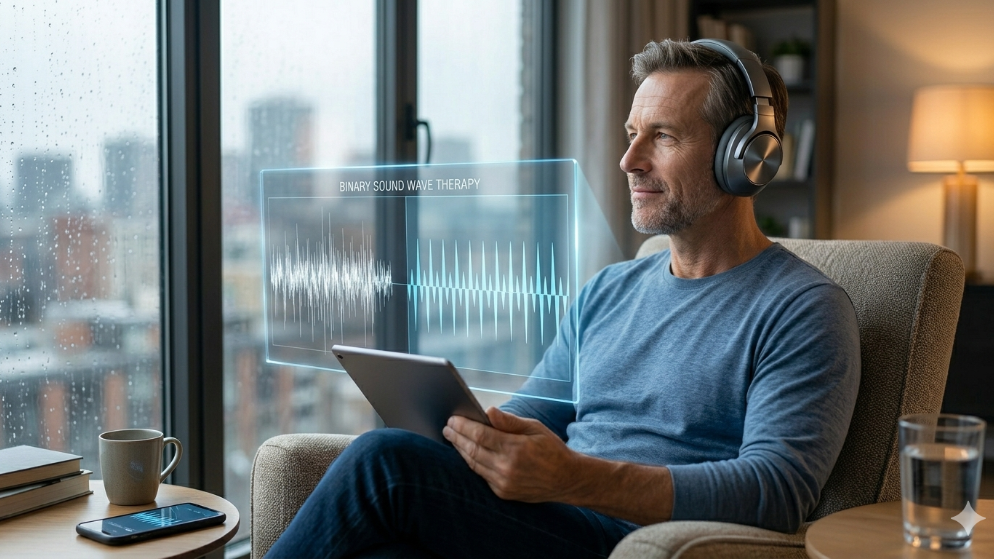
Neurotinn is not a supplement, drop, or capsule — it’s a sound-based digital program. The core idea is simple: tinnitus is often less about the ear itself and more about how the brain processes and fixates on that phantom ringing sound. Neurotinn uses binaural beats, a type of audio illusion created when your left and right ear each receive a slightly different frequency. Your brain perceives a third “beat” frequency, and over time, repeated exposure to specific beat patterns is thought to nudge brain activity toward calmer alpha or theta wave states, similar to what happens during light meditation or the early stages of sleep.
The practical experience is straightforward. You need a quiet space and a pair of headphones — ideally over-ear headphones for better stereo separation — and you press play. There’s no dosage to measure, no ingredients list to review, and no waiting for a supplement to “build up” in your system. That said, it also means results depend heavily on consistency and listening conditions, not a metabolic process.
If you’re comparing digital wellness tools to supplement-based approaches, it can help to understand how ingredient-based products are formulated. Our Advanced Mitochondrial Formula review covers a very different mechanism — cellular energy support — which is a useful contrast to the sound-based approach Neurotinn takes.
How Binaural Beats Are Supposed to Work
The concept behind binaural beats has been studied for decades under the umbrella of “brainwave entrainment.” The theory is that rhythmic auditory stimulation can help synchronize electrical activity in the brain toward the frequency of the beat being played. Slower beats, in the delta and theta range, are associated with relaxation and sleep. Faster beats, in the alpha and low beta range, are associated with calm alertness and focus.
For tinnitus specifically, the goal usually isn’t to physically eliminate the ringing — most audio-based approaches can’t do that — but to reduce how much attention and distress the brain assigns to it. This concept, sometimes called auditory habituation, is a recognized principle in tinnitus management more broadly, and it’s part of why sound therapy in general (not just Neurotinn) is often recommended alongside other coping strategies. According to the Mayo Clinic, sound therapy and habituation-based approaches are commonly used as part of a broader tinnitus management plan, especially since there is no single cure for most cases of chronic tinnitus.
→ See How Neurotinn’s Sound Sessions Work
What the Research Actually Says
It’s important to separate two things: the general science of binaural beats, and specific claims made about any one branded program, including Neurotinn. Independent research on binaural beats has shown mixed but generally encouraging signals for relaxation, mild anxiety reduction, and sleep onset. The National Center for Biotechnology Information (NCBI/NIH) hosts a number of peer-reviewed studies exploring how auditory entrainment can influence measured brainwave activity and subjective relaxation, though sample sizes are often small and results vary between individuals.
Tinnitus itself is a well-documented condition. Healthline describes it as the perception of ringing, buzzing, hissing, or clicking sounds without an external source, and notes that it’s a symptom rather than a disease on its own — often linked to age-related hearing changes, noise exposure, earwax blockages, or underlying health conditions. Because the underlying causes vary so widely, no single approach — sound therapy included — works identically for everyone, which is a fair expectation to set before trying any program like Neurotinn.
For readers who want to look at ongoing clinical research into tinnitus interventions, ClinicalTrials.gov maintains a public registry of studies, including several examining sound-based and neuromodulation therapies for tinnitus relief.
What Using Neurotinn Actually Looks Like
Based on how the program is structured, a typical session involves finding a quiet room, putting on headphones, and playing a track for a set period — often in the range of 15 to 30 minutes. The interface is designed to be simple: pick a session, adjust volume to a comfortable level, and let the audio run without needing to fiddle with settings mid-session.
A few practical notes that matter more than people expect:
- Headphones matter. Binaural beats rely on each ear receiving a distinct tone, so speaker playback or one-earbud listening defeats the purpose entirely.
- Volume should stay moderate. Cranking volume to “drown out” tinnitus can cause auditory fatigue and, over time, may worsen sensitivity rather than help it.
- Consistency beats intensity. A short daily session tends to be more useful for habituation than one long, irregular session per week.
- It’s a management tool, not a cure. Most people describe it as something that helps them cope with and redirect attention away from the ringing, not something that makes tinnitus disappear permanently.
→ Try a Neurotinn Session for Yourself
Neurotinn vs. Other Tinnitus Approaches
People dealing with tinnitus usually run into a similar list of options, so it helps to see where a program like Neurotinn fits in:
- White noise machines: Mask the ringing with generalized ambient sound. Simple and widely available, but they cover the symptom rather than targeting brain response to it.
- Hearing aids: Useful when hearing loss is contributing to tinnitus, but they require professional fitting and are a bigger financial and time commitment.
- Cognitive behavioral therapy (CBT): Considered one of the more evidence-backed approaches for tinnitus-related distress, per resources like the National Institute on Deafness and Other Communication Disorders (NIDCD), but it takes time, consistency, and often a trained therapist.
- Binaural beats programs like Neurotinn: Lower cost of entry, no appointments needed, and flexible timing — but results are self-directed and depend on how consistently you use it.
None of these approaches is guaranteed to work identically for every person, since tinnitus has so many possible underlying causes. Many people combine more than one approach — for example, using sound therapy alongside guidance from an audiologist or ENT.

Who Might Consider Trying Neurotinn
Neurotinn is likely to appeal most to people who:
- Have mild to moderate tinnitus that isn’t tied to an urgent underlying medical issue
- Prefer a non-invasive, drug-free approach before exploring more intensive options
- Already have headphones and a quiet space they can use daily
- Understand that consistency, not a single session, is what shapes results over weeks
It’s less likely to be the right first step for anyone with sudden-onset tinnitus, tinnitus in only one ear, or tinnitus paired with dizziness, hearing loss, or pain — those situations warrant a visit to a doctor or audiologist first, since they can sometimes point to a treatable underlying cause.
→ Check If Neurotinn Fits Your Routine
Setting Realistic Expectations
One of the more honest things you’ll notice across genuine user experiences is that nobody claims instant silence. What people tend to report instead is a gradual shift — the ringing becomes easier to tune out, sleep improves because the mind isn’t fixating on the sound at night, and daily focus feels less disrupted. That’s consistent with how auditory habituation is described in clinical literature: it’s a retraining process, not a switch that turns off.
If you’ve tried other wellness routines that rely on gradual, consistent use rather than instant results, the mindset will feel familiar. For example, our JointBrex review covers a joint-support formula where users are advised to expect gradual improvement over weeks, not overnight change — the same patience principle applies to sound therapy for tinnitus.
A Few Precautions Worth Knowing
Binaural beats are generally considered low-risk for most healthy adults, but a few precautions are worth keeping in mind:
- People with epilepsy or a history of seizures should check with a doctor before using rhythmic audio entrainment, since some forms of stimulation can be a trigger for sensitive individuals.
- Pregnant individuals or anyone with an active ear infection, sudden hearing changes, or ear pain should get a medical evaluation before relying on sound therapy alone.
- Keep volume moderate. Comfortable and clear is the goal — not loud enough to physically mask every trace of the ringing.
- This is a management tool for the psychological and attentional side of tinnitus, not a replacement for diagnosing what’s causing it in the first place.
Final Thoughts
Neurotinn takes a reasonable, well-established concept — using structured sound to influence brain state — and packages it into an easy, headphone-and-quiet-room routine aimed specifically at people dealing with tinnitus. It isn’t a miracle cure, and the science on binaural beats, while promising in areas like relaxation and focus, is still developing when it comes to tinnitus specifically. For people looking for a low-risk, non-invasive tool to try alongside good sleep habits, moderate volume levels, and professional guidance where needed, it’s a reasonable option to explore.
As with any wellness approach, pace your expectations, stay consistent, and don’t hesitate to loop in a doctor or audiologist if your symptoms are new, sudden, or paired with other changes in your hearing.
→ Visit the Official Neurotinn Page
Related Reviews on HonestHealthFiles
Featured Snippet Summary: Neurotinn is a binaural beats audio program designed to help people manage tinnitus by using two slightly different tones in each ear to encourage calmer brainwave states. It is not a medication or supplement, requires headphones and consistent daily use, and is intended as a non-invasive management tool rather than a cure for tinnitus.
Affiliate Disclosure: This article contains affiliate links. If you purchase Neurotinn through a link on this page, HonestHealthFiles.com may earn a commission at no additional cost to you. We only recommend products we believe may provide genuine value to our readers.
Medical Disclaimer: This content is for informational purposes only and is not intended as medical advice. Tinnitus can have many underlying causes, some of which require professional diagnosis and treatment. Always consult a licensed physician or audiologist before starting any new health or sound-therapy routine, especially if you have sudden hearing changes, dizziness, ear pain, or a history of seizures. See our full Disclaimer page for more information.
