
Chronic kidney disease doesn’t usually announce itself. It creeps in quietly — a blood test result slightly off here, a bit more fatigue than usual there — until years have gone by and a doctor uses a word most people never expected to hear about their own kidneys. It’s one of the more common chronic conditions in the world, and also one of the least understood by the people living with it.
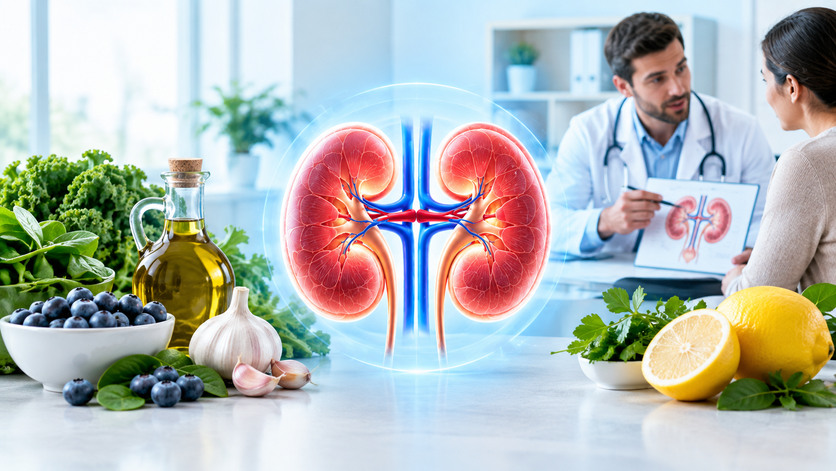
This article walks through what actually drives CKD, what current research says about the gut microbiome’s role in kidney health (a genuinely active area of science, though still early), and the everyday habits that have real evidence behind them for protecting kidney function. None of this is a substitute for medical care — think of it as the background information worth having before your next conversation with a nephrologist or primary care doctor.
What Is Chronic Kidney Disease?
Chronic kidney disease means the kidneys have sustained damage or lost function gradually, usually over months or years, rather than all at once. Healthy kidneys filter waste and excess fluid from the blood, help regulate blood pressure, balance electrolytes, and support red blood cell production. When kidney function declines, waste products build up in the blood, and the downstream effects can touch nearly every system in the body.
CKD is typically measured using estimated glomerular filtration rate (eGFR), a lab value calculated from a blood test, along with markers like protein in the urine. Doctors use these numbers to stage the disease and track how it’s progressing over time.
The Five Stages of CKD
CKD is generally classified into five stages based on eGFR:
• Stage 1: Kidney damage with normal or high filtration rate — often found incidentally, with no symptoms
• Stage 2: Mild reduction in kidney function
• Stage 3: Moderate reduction, often the point where symptoms and complications start to appear
• Stage 4: Severe reduction — this is when planning for dialysis or transplant typically begins
• Stage 5: Kidney failure, requiring dialysis or transplant to sustain life
Progression isn’t guaranteed or linear. Many people are diagnosed at stage 2 or 3 and, with proper management of the underlying causes, never progress to stage 4 or 5. That’s exactly why understanding and managing risk factors matters so much.
Common Risk Factors for CKD
CKD is rarely a disease that shows up on its own. In the large majority of cases, it develops as a consequence of other conditions or long-term stress on the kidneys.
*Diabetes
High blood sugar over time damages the small blood vessels in the kidneys that do the filtering. Diabetes is the single leading cause of CKD in most developed countries.
*High Blood Pressure
Uncontrolled hypertension is the second most common cause. Elevated pressure in the blood vessels gradually damages kidney tissue, and kidney damage in turn makes blood pressure harder to control — the two conditions tend to feed each other.
*Cardiovascular Disease
Heart and kidney health are closely linked. Reduced blood flow from heart conditions can stress the kidneys, and kidney dysfunction raises cardiovascular risk in return.
*Family History and Genetics
A family history of kidney disease, or inherited conditions like polycystic kidney disease, raises individual risk regardless of lifestyle.
*Age
Kidney function naturally declines somewhat with age, and CKD prevalence rises noticeably after age 60.
*Obesity
Excess weight increases the kidneys’ workload and is closely tied to diabetes and hypertension, the two biggest CKD risk factors.
*Smoking
Smoking reduces blood flow to the kidneys and is independently associated with faster decline in kidney function.
*Long-Term Use of Certain Medications
Regular, long-term use of NSAIDs (like ibuprofen or naproxen) at high doses can contribute to kidney damage over time, particularly in people who already have reduced kidney function.
Early Warning Signs Worth Paying Attention To
Early-stage CKD often has no symptoms at all, which is part of why it’s frequently caught late. As function declines further, some people notice:
• Fatigue or low energy
• Swelling in the ankles, feet, or hands
• Changes in urination — foamy urine, or urinating more or less often than usual
• Persistent itching
• Muscle cramps
• Difficulty concentrating
• Poor appetite or a metallic taste in the mouth
None of these symptoms are unique to kidney disease, which is exactly why routine blood and urine testing — especially for people with diabetes, high blood pressure, or a family history — is the more reliable way to catch CKD early.
The Gut Microbiome and Kidney Health: What the Research Actually Shows
Over the last decade, one of the more interesting developments in kidney research has been growing interest in the “gut-kidney axis” — the relationship between the trillions of bacteria living in the digestive tract and how well the kidneys function.
What Researchers Are Looking At
The gut microbiome plays a role in digestion, immune regulation, and the production of various compounds that circulate through the bloodstream. In people with CKD, researchers have consistently observed a shift in the balance of gut bacteria — a state generally referred to as dysbiosis, marked by fewer of the bacteria that produce beneficial short-chain fatty acids and more of certain bacteria that generate compounds called uremic toxins, including indoxyl sulfate and p-cresyl sulfate.
Because the kidneys are responsible for filtering these compounds out of the blood, and because CKD reduces that filtering capacity, there appears to be something of a feedback loop: reduced kidney function allows these gut-derived compounds to build up, and their buildup is associated with further inflammation and vascular stress, which in turn appears to accelerate kidney decline. This relationship is often described as the gut-kidney axis, and more recently researchers have expanded it into a broader gut-kidney-heart axis given how closely cardiovascular and kidney health track together in CKD patients.
Where the Science Currently Stands
It’s important to be precise about what this research does and doesn’t show. Multiple peer-reviewed reviews published in recent years — including work appearing in journals like Frontiers in Medicine and Frontiers in Microbiology — describe the gut-kidney axis as a genuinely active and promising research area, with mechanistic and observational evidence linking gut bacterial imbalance to CKD progression and complications.
At the same time, these same reviews are consistent in describing microbiome-directed approaches — things like specific probiotics, prebiotics, dietary fiber interventions, or more experimental approaches like fecal microbiota transplantation — as still under investigation. Researchers describe the evidence as promising and mechanistically plausible, not as an established treatment or reversal method for CKD in clinical practice. Large-scale human trials confirming that manipulating gut bacteria can meaningfully slow or reverse kidney disease in the general CKD population are still limited.
In plain terms: there’s real, credible science showing that gut bacteria and kidney function are connected, and that people with CKD tend to have a different gut bacterial makeup than people without it. What hasn’t been established is that changing your gut bacteria through diet, supplements, or any other intervention can reverse existing kidney damage or cure the disease. Anyone making that specific claim is running ahead of what the current research actually supports.
Why This Nuance Matters
Emerging science is often genuinely exciting, and it’s reasonable to be hopeful about where gut-microbiome research is headed. But there’s a meaningful difference between “this is a promising area of ongoing research” and “this is a proven solution you can apply today.” CKD is a serious, progressive condition, and decisions about managing it are best made with a nephrologist or physician who can interpret lab values, monitor progression, and adjust a plan based on what’s actually happening in your body — not based on a single dietary theory, however well-supported the underlying science sounds.
Lifestyle Factors That Support Kidney Health
Separate from the microbiome research, there’s a well-established body of evidence on lifestyle factors that support kidney health and can help slow CKD progression when combined with appropriate medical care.
Diet
Depending on CKD stage, doctors and renal dietitians often recommend moderating sodium, protein, potassium, or phosphorus intake — the specifics vary a lot by individual and stage, which is why a renal dietitian’s guidance matters more than generic advice. Diets emphasizing vegetables, fruits, whole grains, and limited processed food are broadly associated with better kidney and cardiovascular outcomes.
Blood Pressure and Blood Sugar Management
Because diabetes and hypertension are the two leading causes of CKD, keeping both under control — through medication, diet, and monitoring — is consistently shown to be one of the most effective ways to slow kidney function decline.
Staying Hydrated (Appropriately)
Adequate hydration supports normal kidney filtration, though people in later CKD stages sometimes need to limit fluid intake under medical guidance — more water is not automatically better once kidney function is significantly reduced.
Physical Activity
Regular moderate exercise supports blood pressure control, healthy weight, and cardiovascular health, all of which indirectly benefit the kidneys.
Being Cautious With Over-the-Counter Medications
Avoiding regular, long-term use of NSAIDs, and checking with a doctor or pharmacist before starting new supplements, protects kidneys that may already be under strain.
Not Smoking
Quitting smoking is one of the more impactful changes available, given its independent association with faster kidney function decline.
Routine Monitoring
For anyone with risk factors — diabetes, high blood pressure, obesity, a family history of kidney disease, or age over 60 — periodic blood and urine testing is the most reliable way to catch changes in kidney function early, when there’s the most room to act.
How CKD Connects to Other Conditions
Part of what makes CKD tricky to manage is that it rarely travels alone. Because the kidneys interact with so many other systems, kidney decline and other chronic conditions tend to reinforce each other rather than stay separate problems.
Cardiovascular disease is the clearest example — people with CKD have a significantly higher risk of heart attack and stroke than the general population, and cardiovascular disease is actually a more common cause of death among CKD patients than kidney failure itself. Anemia is another common complication, since healthy kidneys produce a hormone that signals the body to make red blood cells; as kidney function drops, so can red blood cell production, contributing to the fatigue many CKD patients report. Bone health can also be affected, since the kidneys play a role in regulating calcium, phosphorus, and vitamin D.
This is part of why CKD management usually isn’t just about the kidneys in isolation — it typically involves coordinated care across cardiology, endocrinology, and sometimes hematology, depending on what else is going on.
Common Myths About “Reversing” CKD
Because CKD is frightening and, at later stages, genuinely life-altering, it attracts a lot of misinformation. A few things worth knowing:
• There is currently no supplement, diet plan, or lifestyle program proven to reverse established kidney damage. Some interventions can slow progression or improve markers when combined with medical treatment, but “reversal” claims for diagnosed CKD are not supported by mainstream clinical evidence.
• Early-stage CKD (stage 1 or 2) can sometimes stabilize or even show improved lab values if the underlying cause — like blood sugar or blood pressure — is brought under control. This is different from reversing structural kidney damage.
• Personal stories and testimonials, however compelling, aren’t a substitute for clinical evidence. Kidney function naturally fluctuates, and correlation with a new diet or supplement doesn’t establish that it caused an improvement.
• Dialysis and transplant are serious interventions, but for people who reach kidney failure, they are life-sustaining treatments, not something to be feared into avoiding medical care altogether.
When to See a Doctor
If you have diabetes, high blood pressure, a family history of kidney disease, or you’re noticing unexplained fatigue, swelling, or changes in urination, it’s worth requesting kidney function tests (a basic blood panel including eGFR, plus a urine test) at your next checkup. CKD found early gives you and your doctor far more room to slow its progression than CKD found at stage 4.
If you’ve already been diagnosed with CKD, working closely with a nephrologist — and asking questions about diet, medication interactions, and what realistic markers of progress look like for your specific stage — remains the most evidence-based path forward.
Frequently Asked Questions
Can chronic kidney disease be cured?
Established kidney damage generally cannot be reversed with current medical treatment, though progression can often be slowed significantly, and in early stages, kidney function can sometimes stabilize if the underlying cause is well managed.
Is the gut microbiome connection to kidney disease real science, or just marketing?
It’s real, active research — multiple peer-reviewed studies describe a clear association between gut bacterial imbalance and CKD progression. What isn’t yet established is that manipulating gut bacteria through diet or supplements can reverse or cure CKD in humans; that claim goes beyond what current clinical evidence supports.
What foods are generally recommended for kidney health?
Recommendations vary significantly by CKD stage and individual lab values, which is why working with a renal dietitian is more useful than following generic advice. Broadly, diets lower in processed food, sodium, and added sugar, and higher in vegetables and whole foods, are associated with better outcomes.
Does drinking more water protect the kidneys?
For people with normal kidney function, adequate hydration supports kidney health. But for people in later CKD stages, fluid intake sometimes needs to be limited, so this is genuinely something to discuss with a doctor rather than assume.
How often should someone at risk get tested?
There’s no universal answer, but many doctors recommend annual kidney function testing for people with diabetes, high blood pressure, obesity, or a family history of kidney disease — more frequently if CKD has already been diagnosed.
Final Thoughts
Chronic kidney disease is common, serious, and closely tied to conditions like diabetes and high blood pressure that many people are already managing. The gut-microbiome research in this space is genuinely fascinating and worth keeping an eye on — but it’s still research, not a settled treatment, and it’s important to be honest about that distinction rather than let excitement about the science outrun what’s actually been proven.
The most reliable, evidence-backed path for anyone concerned about kidney health remains the unglamorous one: manage blood pressure and blood sugar, eat well, stay active, avoid smoking, be cautious with long-term NSAID use, and get regular testing — all in partnership with a doctor who can track your specific numbers over time.
This article is for general informational purposes only and is not medical advice. It is not intended to diagnose, treat, cure, or prevent any disease. Always consult a qualified healthcare provider, such as a physician or nephrologist, for guidance specific to your own health and kidney function.
