
If you’re a man over 40, there’s a good chance you’ve already had that conversation with yourself at 2 a.m. — standing in the bathroom for the third time that night, wondering when getting older started meaning “getting up more often.” Prostate issues are one of those topics nobody really wants to talk about, but nearly every man eventually runs into some version of it. That’s exactly the gap TitanFlow, from supplement company Zenith Labs, is trying to fill.
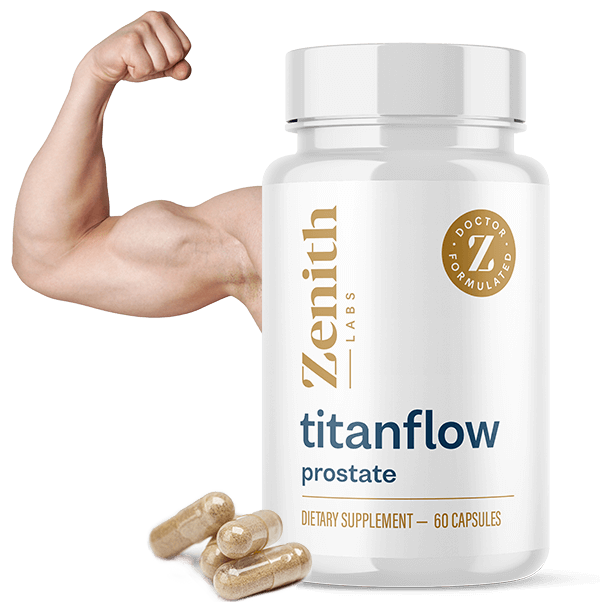
I spent time digging into what’s actually in this formula, how it’s positioned, what the ingredient science says, and where the marketing claims might be getting ahead of the evidence. Here’s the honest breakdown.
What Is TitanFlow?
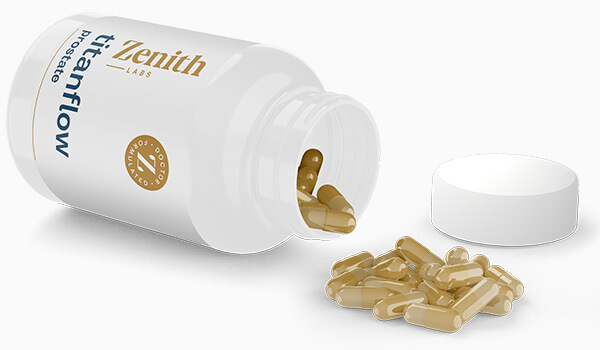
TitanFlow is a prostate support supplement marketed by Zenith Labs, a company that’s been active in the natural health supplement space for several years. Unlike a lot of prostate formulas that come in bulky capsules, TitanFlow is designed as a chewable tablet — the idea being that chewing allows some of the active compounds to begin absorbing through the tissue in the mouth rather than waiting on full digestion.
The pitch is straightforward: support healthy urinary flow, reduce nighttime bathroom trips, and generally ease the day-to-day friction that comes with an enlarged or irritated prostate — all without a prescription.
It’s sold exclusively through the official website, priced at roughly $59 for a single bottle, with the usual discounts kicking in when you buy multiple bottles. It also comes with a 60-day money-back guarantee, which is fairly standard in this category and worth knowing about before you commit to a larger order.

The Ingredients: What’s Actually Inside
This is where a supplement review earns its keep, because marketing copy is cheap — ingredient panels are where you find out what you’re really paying for. Prostate formulas in this category tend to lean on a fairly well-established set of botanicals and nutrients, and TitanFlow follows that general pattern. Based on the formula and category, here’s what to expect and what the research says about each:
Saw Palmetto Extract — This is the cornerstone ingredient in almost every prostate supplement on the market, and for good reason. Saw palmetto berry extract has been studied for its potential role in supporting normal urinary function in men, largely through its interaction with the enzyme that converts testosterone into DHT (dihydrotestosterone), a hormone linked to prostate enlargement. Clinical results have been mixed — some studies show meaningful symptom improvement, others show results close to placebo — but it remains the most consistently used ingredient in this category for a reason.
Beta–Sitosterol — A plant sterol commonly paired with saw palmetto, beta-sitosterol has a reasonable body of research behind it for supporting urinary flow and reducing the sensation of incomplete bladder emptying. It’s one of the more evidence-backed components you’ll find in prostate blends.
Pygeum Africanum — Derived from African cherry tree bark, pygeum has a long history of traditional use for urinary and prostate complaints and has been studied in several smaller clinical trials, generally showing modest benefits for urinary symptoms.
Lycopene — This is the antioxidant that gives tomatoes their red color, and it’s frequently included in prostate formulas because of research linking it to prostate cell health, largely due to its antioxidant properties.
Zinc — An essential mineral that plays a documented role in prostate tissue and hormone regulation. Zinc deficiency has been associated with prostate issues in some research, making it a logical inclusion.
Taken together, this is a fairly conventional prostate-support stack. None of these ingredients are exotic or unproven — they’re the same names you’ll see across most reputable products in this category. The real questions are about dosage transparency and whether the amounts used are clinically meaningful, which is something Zenith Labs doesn’t always spell out in exact milligrams on their marketing pages.

How Is It Supposed to Work?
According to the company, the mechanism centers on two things: supporting healthy blood flow to the pelvic region (which theoretically improves nutrient and oxygen delivery to prostate tissue) and reducing inflammation that can aggravate bladder and urinary symptoms. The chewable delivery format is marketed as a way to get some of the ingredients absorbing faster than a standard capsule.
It’s worth being clear-eyed here: prostate enlargement, medically known as benign prostatic hyperplasia (BPH), is a hormonal and structural condition that affects a large percentage of men as they age. No dietary supplement — this one included — is going to reverse or cure BPH. What ingredients like saw palmetto, beta-sitosterol, and pygeum may realistically help with is symptom management: things like urgency, flow strength, and nighttime frequency, for some users, to some degree. That’s a meaningfully different claim than “fixing” the prostate, and it’s the claim that’s actually supported by research.
What the Marketing Gets Right — and Where to Be Skeptical
To Zenith Labs’ credit, they’re using ingredients that have a genuine research history rather than inventing a proprietary “miracle” compound with no scientific backing. That alone puts TitanFlow ahead of a lot of the sketchier products floating around in this space.
Where I’d urge some caution is in how confidently prostate supplements in general tend to be marketed. Phrases like “prevents prostate cancer risk” or “balances hormones” show up a lot in this category’s advertising, and it’s important to separate that kind of language from what the actual clinical research supports. Saw palmetto and beta-sitosterol have decent evidence for symptom support in men with mild to moderate BPH symptoms — they don’t have evidence for cancer prevention, and no legitimate supplement company should be implying otherwise. If you see that kind of claim anywhere, treat it as marketing, not medicine.
It’s also worth noting that individual results with any prostate supplement vary considerably. Some men respond well to saw palmetto-based blends; a meaningful percentage see little to no change. That’s just the honest state of the research, and it applies to TitanFlow the same way it applies to every competitor in this space.
Pros
- Uses a research-backed ingredient set (saw palmetto, beta-sitosterol, pygeum, lycopene, zinc) rather than obscure or unproven compounds
- Chewable format may appeal to men who dislike swallowing large capsules
- 60-day money-back guarantee reduces financial risk if it doesn’t work for you
- Marketed as free from major allergens and unnecessary fillers
- Backed by a company with an established presence in the supplement space
Cons
- Exact ingredient dosages aren’t always transparently listed on the marketing pages
- Only available through the official website — not sold in retail stores or major marketplaces
- Price point ($59/bottle at full price) is higher than some drugstore alternatives
- Like all prostate supplements, results are not guaranteed and vary by individual
- Marketing language sometimes overstates what the research actually supports
Who Might Consider Trying It
TitanFlow is realistically aimed at men who are noticing early-to-moderate urinary symptoms — more frequent nighttime trips, a weaker stream, a sense of urgency — and who are looking for a natural, non-prescription option to try before considering medication. It’s not a replacement for medical evaluation, and it’s not going to be the right fit for men with significant or worsening symptoms, who really should be working with a urologist rather than relying on a supplement alone.
If you’re someone who’s already tried saw palmetto on its own and didn’t notice much, a combination formula like this one — which adds beta-sitosterol, pygeum, and lycopene into the mix — might be worth a look, since some men respond better to multi-ingredient blends than to single-ingredient products.
Price and Guarantee
A single bottle runs around $59, with per-bottle pricing dropping when you buy in 3- or 6-bottle packages, which is the standard structure for this type of direct-to-consumer supplement. The 60-day refund window gives you a reasonable amount of time to actually test whether it’s doing anything noticeable, which is important — these ingredients typically take several weeks of consistent use before any effect (if one occurs) becomes apparent.
Final Verdict
TitanFlow isn’t reinventing the wheel, and it isn’t trying to. It’s a chewable prostate support supplement built around a handful of genuinely researched ingredients — saw palmetto, beta-sitosterol, pygeum, lycopene, and zinc — that show up across most credible products in this category. The formula makes sense on paper, the guarantee reduces some of the financial risk, and the company has a track record in the space.
What it isn’t is a cure, a replacement for medical care, or a guarantee of results. Like every prostate supplement on the market, it works for some men and does very little for others, and the marketing claims around it should be read with a healthy dose of skepticism, especially anything that veers into disease-prevention territory.
If you’re looking for a natural first step to try alongside lifestyle changes — hydration habits, reduced evening fluid intake, regular checkups — TitanFlow is a reasonable, ingredient-backed option to consider. Just go in with realistic expectations, give it the full 60-day window to judge whether it’s working for you, and don’t skip the conversation with your doctor if symptoms are significant or getting worse.
This article is for informational purposes only and does not constitute medical advice. Individual results may vary. Consult a healthcare professional before starting any new supplement, particularly if you have an existing prostate condition or are taking medication. This content may contain affiliate links, and a purchase made through them may result in a commission at no additional cost to you.
